
Views: 0 Author: Site Editor Publish Time: 2026-05-05 Origin: Site


Full-length garments often spark a distinct styling dilemma. They offer incredible comfort and beautiful movement. Yet, many consumers struggle to wear them confidently in everyday settings. maxi dresses provide excellent coverage, but they carry a real risk. They can easily swallow your frame if styled incorrectly. Many people mistakenly restrict these flowing pieces to summer vacations. This mindset limits your outfit potential and wastes valuable closet space.
This guide introduces a highly systematic approach to styling floor-grazing silhouettes. You will learn to master structural proportions and leverage smart texture contrasts. We also cover strategic layering techniques for any climate. Discover how to elevate your daily looks. You will learn to maximize your wardrobe across all seasons and dress codes without feeling overwhelmed by fabric.
Foundation First: Success depends on matching the dress’s neckline and waistline to the wearer’s structural proportions.
Proportion Control: The "frumpy" risk is mitigated by using cropped outerwear or strategic belting to redefine the waist.
Texture Clashing: Combining soft, feminine fabrics with hard, structured materials (leather, heavy knits) elevates the look from basic to intentional.
Cross-Seasonal ROI: Maxi dresses function year-round via internal layering (base layers beneath) and external modification (sweaters and jackets above).
You must shortlist the correct base product before attempting to style it. The architecture of your garment dictates every styling choice you make afterward. Understanding how different cuts interact with your body geometry ensures a solid starting point.
Waistline placement fundamentally alters your visual center of gravity. Choosing the right one creates a flattering, intentional silhouette.
Empire Waists: This cut sits just below the bust. We recommend evaluating empire styles for elongating the lower body. They are ideal for disguising the midsection. The fabric cascades freely over the stomach, offering exceptional comfort without sacrificing shape.
Drop Waists: This design sits near the hips. It significantly lowers the visual center of gravity. You should pair drop waists with minimalist footwear. Bare sandals or sleek pointed flats prevent the outfit from looking bottom-heavy. This style channels a relaxed, vintage aesthetic.
Natural & Cinched Waists: These cuts rest at your body's narrowest point. They serve as the most versatile baseline in your wardrobe. A natural waist allows effortless integration of wide belts. It also perfectly accommodates cropped jackets.
Necklines manage the vast expanse of fabric typical of longer garments. They dictate where the eye travels first.
Neckline Style | Visual Function | Best Styling Practices |
|---|---|---|
V-Necks & Wrap Styles | Draw the eye vertically downward. | Use to break up a continuous block of full-length fabric. Great for minimizing broad shoulders. |
High-Neck / Halter Styles | Provide maximum chest and torso coverage. | Sweep hair up or wear statement earrings. This prevents a suffocating, fabric-heavy visual effect. |
Straight / Square Cuts | Add sharp geometric angles to the torso. | Pair with softer, voluminous skirts. The sharp lines provide essential structure to balancing romantic bottoms. |
Layering introduces complexity. It also introduces the common pitfall of a shapeless, boxy silhouette. You must navigate implementation realities carefully. Mastery lies in balancing contrasting visual weights.
Great outfits thrive on tension. You should contrast the inherent fluidity of maxi dresses with structured tailoring. A flowing chiffon skirt looks highly intentional under an oversized blazer. Structured military jackets inject a rugged masculinity. This masculine edge perfectly anchors romantic, sweeping hems. It prevents the outfit from looking overly precious.
Outerwear length makes or breaks the outfit. You want to adhere strictly to visual ratio rules.
Cropped Jackets: These should stop exactly at your natural waist. This placement complements the dress's long vertical line. It creates an optimal one-third to two-thirds visual ratio. Your legs appear significantly longer.
Long-line Coats: These outerwear pieces must match or slightly exceed the hemline of your dress. Coats stopping at the knee create awkward visual breaks. An unbroken line from shoulder to ankle looks sleek and authoritative.
You can wear chunky knits over long garments without looking bulky. Use this specific volume control method to create a faux cropped effect.
Put on your dress and layer your chosen chunky sweater over it.
Fasten a sturdy waist belt directly over the sweater at your natural waist.
Gently pull the sweater fabric upward and over the belt.
Tuck the hem securely so the belt becomes entirely hidden by the folded fabric.
Adjust the bloused sweater to ensure an even, cropped appearance all the way around.
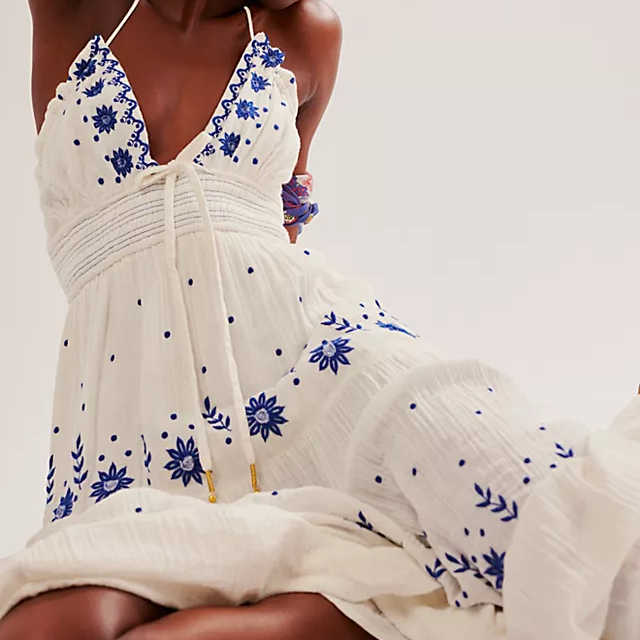
Advanced fashion frameworks rely heavily on fabric combinations. Elevating your styling requires moving beyond basic cotton pairings. Tactility and color theory separate amateur outfits from expert styling.
Tough-luxe involves marrying opposites. You combine delicate, lightweight materials with abrasive or heavy textures. This friction creates visual interest.
Delicate Bases: Start with a smooth satin slip or a breezy floral cotton poplin.
Heavy Top Layers: Add a tough leather moto jacket, distressed denim, or heavy suede.
The Result: The rugged outerwear grounds the delicate base. It transforms a flimsy summer piece into a robust, city-ready ensemble.
Color application dictates the mood of your outfit. Both monochromatic and high-contrast approaches offer distinct benefits.
Monochromatic: Wearing tonal layers creates an unbroken vertical line. Pair an olive green slip with a sage jacket. This tonal continuity produces an elongated, highly sophisticated look. It removes visual clutter.
Print Grounding: Busy prints easily overwhelm the eye. You must ground them using strategic color extraction. Pull one dominant neutral color from the dress pattern. Match your jacket and shoes precisely to that exact shade. This technique tames chaotic prints into cohesive outfits.
Accessories act as the architectural hardware of your outfit. Never settle for default options.
Swap flimsy fabric tie-belts immediately. Replace them with structured D-ring belts or wide suede alternatives. Firm belts provide essential waist definition.
Introduce animal print footwear intentionally. Calf-hair loafers or snakeskin boots disrupt solid-color garments perfectly. They add a layer of calculated rebellion.
You should demand scalability from your garments. Flowing floor-length pieces must perform far beyond warm weather. Strategic modifications allow these items to function 365 days a year.
Warm weather styling prioritizes breathability and "throw-on-and-go" efficiency. You want maximum impact with minimal effort.
Pair lightweight cotton or linen blends with natural woven accessories. Espadrilles and wide-brim hats emphasize a relaxed, sun-ready aesthetic. Evening temperatures often drop unpredictably. Keep a thin, unlined denim jacket handy. It provides just enough warmth without suffocating your skin. Rely on maxi dresses featuring high slits during heatwaves to encourage cooling airflow around your legs.
Cold weather demands a shift toward insulation and structural layering. You can weatherproof your garments using internal and external strategies.
Layering Type | Core Strategy | Key Garments |
|---|---|---|
Internal Layering | Provide invisible warmth underneath the dress without altering the external silhouette. | Thermal leggings, fleece-lined tights, fine-knit turtlenecks, silk long-johns. |
External Layering | Block wind and build architectural shape over the garment. | Knee-high boots (closes the draft gap), heavy wool topcoats, structured leather jackets. |
Swap out your sandals immediately when autumn arrives. Knee-high leather boots close the exposed gap between your hem and shoe. This effectively blocks freezing wind. Layer heavy wool topcoats over the ensemble to create a dramatic, insulated barrier against the elements.
Theoretical knowledge requires practical application. Use these ready-to-use decision frameworks to drive immediate confidence. They eliminate decision fatigue when getting dressed.
Formula: Ribbed Cotton Maxi Dress + Low-top Sneakers + Oversized Denim Jacket + Baseball Cap.
Result: Sporty, functional, high mobility. The ribbed fabric stretches comfortably for running errands. Sneakers and a cap communicate an off-duty, approachable vibe. The oversized jacket adds necessary street-style credibility.
Formula: Sheath or Wrap Maxi Dress + Tailored Blazer + Pointed-toe Ankle Boots.
Result: Polished and compliant with office dress codes while remaining deeply comfortable. The wrap style maintains modesty. The structured blazer asserts professional authority. Pointed boots elongate the leg beneath the desk.
Formula: Satin Slip Maxi Dress + Cropped Leather Moto Jacket + Stiletto Heels + Minimalist Clutch.
Result: High-contrast elegance. The delicate satin catches evening light beautifully. The aggressive leather jacket provides a tough-luxe edge. Swapping a heavy day-bag for a clutch instantly signals a shift to nighttime formality.
Formula: Tiered Maxi Dress + Slouchy Cardigan (belted) + Chunky Chelsea Boots.
Result: Weather-resistant, practical, and highly textured. The tiered skirt offers generous movement. Belting the slouchy cardigan prevents a sloppy silhouette. Chunky boots tackle wet pavements and muddy autumn leaves with ease.
Successful outfit creation heavily relies on managing proportions and contrasting textures. A long garment does not have to overwhelm your frame. By paying close attention to jacket lengths, waistline definition, and fabric mixtures, you control the final visual output. Your longest pieces can easily transition from summer heat to winter chills using smart internal layering.
Take action by auditing your current wardrobe today. Look for foundational layering pieces like cropped jackets, structured belts, and varied footwear. Ensure you have these supporting actors ready. Then, you can confidently select your next core full-length silhouette and wear it anywhere.
A: Your shoe choice dictates the formality of the outfit. Casual flat sandals offer a breezy, vacation-ready look. Chunky boots provide rugged grounding, perfect for balancing ultra-feminine skirts in autumn. High heels or sleek stilettos instantly elevate the garment for formal events, adding crucial height to prevent the hem from dragging.
A: Focus heavily on V-necks and empire waists to draw the eye upward and elongate your lower half. Adopt monochromatic color schemes to create an unbroken vertical line. Ensure your hem barely grazes the top of your shoe. Excessive fabric pooling on the floor visually shrinks your frame.
A: Absolutely. Fabric choice is the deciding factor. Choose luxurious materials like satin, silk, or fine chiffon instead of casual jersey cotton. Enhance the look with elevated jewelry, an elegant clutch, and refined heels. These upgrades instantly shift the garment into formal dress code compliance.


