
Views: 0 Author: Site Editor Publish Time: 2026-01-15 Origin: Site


Shoppers often face a confusing dilemma when assessing a garment's value. You see a high price tag and instinctively assume the quality matches the cost. This is the "Price Paradox." While a "Price Floor" theory certainly exists—meaning some items are simply too cheap to contain quality materials or ethical labor—an exorbitant price does not guarantee longevity. Brand inflation often masks average construction with a luxury logo. To make smarter purchasing decisions, we must look past the marketing and price sticker.
Most buyers rely heavily on aesthetics, choosing items based on color, print, or trend appeal. This guide shifts that focus entirely. We will examine "Structural Integrity" and "Material Science" to determine the true value of a garment. Whether you are a discerning consumer building a durable capsule wardrobe or a boutique buyer vetting a dresses manufacturer, understanding the mechanics of high-quality construction is essential. By learning to identify expert craftsmanship, you regain control over your investment.
In this article, you will learn to dismantle the visual components of a dress. We move from the tactile feel of the fabric to the hidden engineering of the seams. You will discover why weight matters, how to spot lazy pattern making, and why the inside of a dress tells you more than the outside. True quality is objective, measurable, and identifiable if you know where to look.
The 30% Rule: Why high-end garments may still contain up to 30% synthetics for durability, while 100% synthetic usually signals cost-cutting.
The "Inside-Out" Test: True quality is hidden in the seam allowances, lining attachments, and grain alignment.
CPW > Retail Price: Moving from sticker price to Cost Per Wear (CPW) as the primary evaluation metric.
The fabric is the foundation of any garment. If the material fails, the most precise stitching in the world cannot save the dress. Discerning the difference between premium natural fibers and cheap synthetics requires developing a "tactile memory." High-quality fabrics possess distinct physical characteristics that cheaper simulations struggle to replicate.
A common misconception is that all synthetics are bad. The reality is nuanced. You must distinguish between synthetics used for performance and those used strictly to cut costs. High-end designers often blend natural fibers with small amounts of synthetics to improve longevity and shape retention. However, a threshold exists.
Tactile Memory and Blind Tests
To judge fabric, close your eyes. High-grade silk warms to your body temperature quickly and feels smooth but not slippery. Cheap polyester often feels cool, clammy, or plasticky. High-quality cotton should feel substantial and crisp, not limp. By removing visual cues, your fingers can detect the "dryness" or "oiliness" of a fabric, which often indicates the quality of the finishing chemicals used.
The "Acceptable Synthetic" Threshold
Synthetics serve a purpose in specific silhouettes. For example, a structured bodycon style relies on elastane or high-grade spandex for stretch recovery. Without it, the dress would sag at the knees or elbows after an hour of wear. In contrast, 100% polyester used in a summer day dress usually traps heat and retains odors. If you are examining Dresses intended for summer wear, a high percentage of non-breathable synthetic is a red flag for comfort, regardless of the price.
Data Points: Fiber Length and Microns
Quality is often measurable at the microscopic level. The durability and softness of a fabric depend on the length of the fibers used to spin the yarn.
| Material | Quality Indicator | Standard vs. Premium |
|---|---|---|
| Cotton | Staple Length | Standard (21mm) vs. Sea Island/Pima (35mm+). Longer fibers pill less and feel smoother. |
| Wool | Micron Count | Standard (>24 microns) vs. Superfine Merino (<18 microns). Lower microns eliminate the "itch" factor. |
| Silk | Momme Weight | Standard (12-16mm) vs. Luxury (19-22mm+). Heavier silk drapes better and resists wrinkling. |
The density of the weave determines how well a dress holds its shape and how long it resists holes. Manufacturers cutting corners will often stretch the fabric during the weaving process or use fewer threads per inch to save raw material costs.
The Light Test
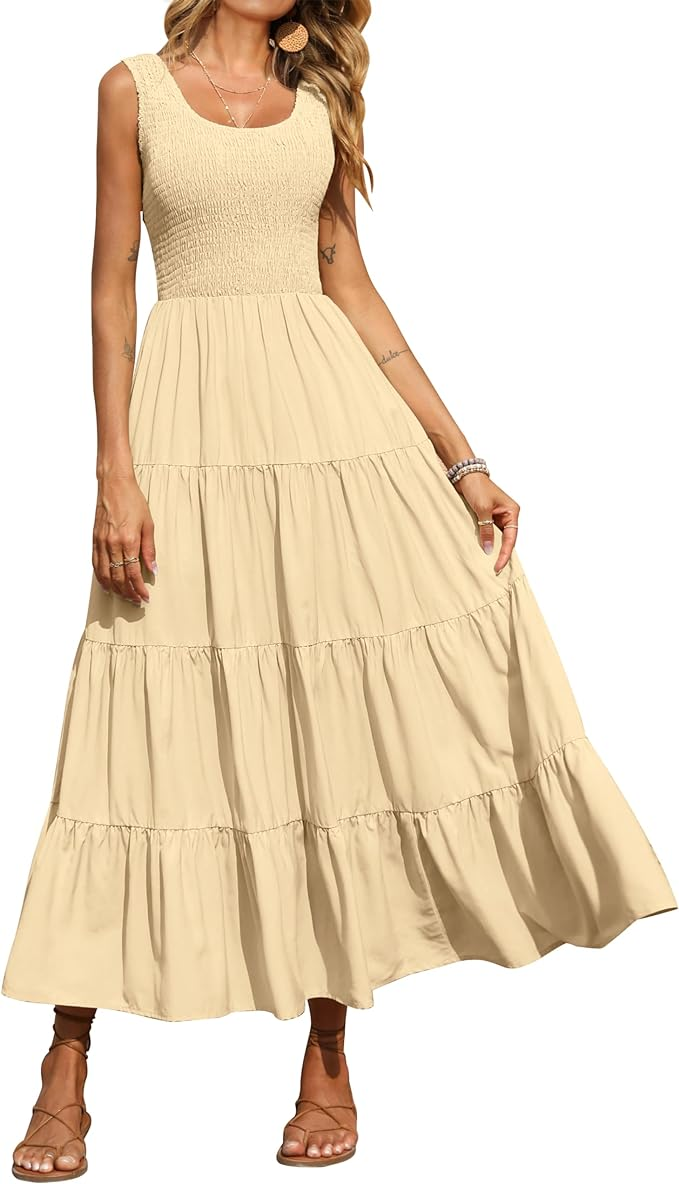
This is the quickest way to spot a low thread count. Hold the garment up to a bright light source or a window. This is particularly effective when shopping for Maxi Dresses, where large panels of fabric are visible. You want to see an even, tight grid of threads. If you see significant gaps, irregular splotches of light, or a grid that looks like a window screen, the fabric is likely weak. It will distort in the wash and may tear at the seams under stress.
Weight vs. Drape (GSM Analysis)
GSM (Grams per Square Meter) measures fabric weight. While a summer dress should be lighter than a winter gown, it should still have "guts." A flimsy fabric will cling unflatteringly and often requires a slip to prevent transparency. A high-quality Party Dress should utilize fabric with a higher GSM relative to its volume. This weight ensures the skirt swings beautifully when you move and falls back into place instantly. If the hem flutters erratically or clings due to static, the fabric lacks the necessary density.
Once the material passes inspection, you must evaluate the engineering. A dress is constructed from flat pieces of fabric manipulated into a 3D shape. The quality of this construction dictates whether the dress survives three washes or three hundred.
Stitching acts as the glue of the garment. Weak stitching is the primary reason for clothing failure. You do not need to be a tailor to spot the difference between a rushed job and expert assembly.
Stitch Density (SPI)
Look closely at a single inch of the seam. Count the stitches. This metric is known as Stitches Per Inch (SPI).
Budget garments: Often have 7–9 stitches per inch. Fewer stitches mean the machine runs faster, saving time and money, but the seam is prone to gaping.
Quality garments: Typically feature 10–12+ stitches per inch. This high density creates a tight, secure bond that resists popping.
This is crucial for fitted items like Mini Dresses. Because these styles sit closer to the body, they endure significant tension when you sit, bend, or stretch. Low SPI on a fitted dress is a recipe for a seam failure in public.
Seam Finishes
Turn the dress inside out. The raw edges of the fabric where pieces join are the most vulnerable points.
Serging (Overlock): The most common finish. It wraps thread around the raw edge. While acceptable, it is the bare minimum.
French Seams: The gold standard for sheer or delicate fabrics. The raw edge is encased inside the seam itself, creating a clean finish with no visible threads. It takes twice as long to sew but ensures the fabric never frays.
Bias Binding: The raw edge is wrapped in a strip of fabric. This is a sign of high-end manufacturing often found in unlined coats or heavy dresses.
Reinforcement Points
Check the high-stress areas: the top of a kick pleat, the corners of pockets, and the base of the zipper. You should see "bar tacks"—a dense cluster of stitches designed to reinforce the area. Additionally, quality dresses often include a clear silicone tape or stabilizer strip sewn into the shoulder seams. This prevents the neckline from stretching out of shape after hanging in your closet for months.
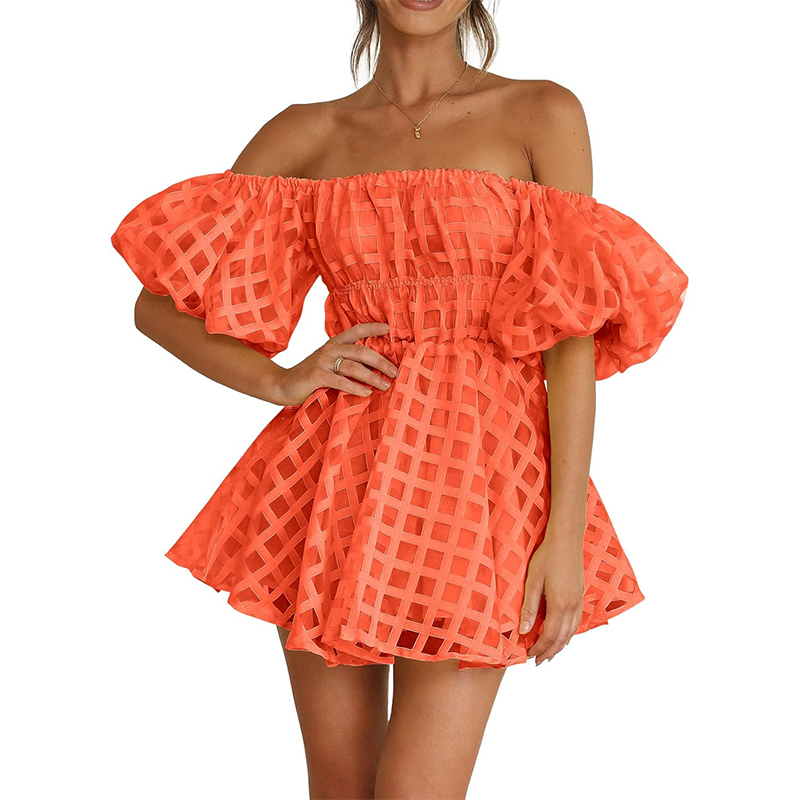
The visual continuity of a dress signals the care taken during the cutting phase. Mass production prioritizes speed; high-end production prioritizes precision.
The Alignment Test
If the dress features a print, specifically stripes, plaids, or large florals, look at the side seams. Do the lines continue uninterrupted across the seam, or do they disjoint? Perfect pattern matching requires the manufacturer to waste more fabric to align the pieces, increasing the cost. Mismatched patterns are a clear sign that yield (fabric economy) was prioritized over aesthetics.
Cut on Grain
Fabric is woven with a vertical grain (warp) and horizontal grain (weft). Garments must be cut parallel to the vertical grain to hang straight. If a manufacturer tilts the pattern pieces to squeeze more items out of a bolt of fabric, the dress is "off-grain." The result is the "twisting" effect, where the side seams slowly rotate toward the front of your leg after laundering. This is a common and frustrating defect in cheap Midi Dresses, where the longer length makes the twisting more obvious and uncomfortable.
Fit is not just about size; it is about how the garment accommodates the body's movement. Manufacturers often use "cheat codes" to make garments fit a wider range of bodies without complex tailoring.
Shirring and Elastic
Shirring is a technique where elastic thread gathers the fabric, creating a stretchy, textured panel. While stylistically valid, it is frequently used as a shortcut. A bodice made entirely of shirring removes the need for darts, zippers, and precise sizing. It allows a manufacturer to label a dress "One Size" or group sizes broadly (e.g., S/M). Be critical when evaluating items like Customized Ruffle Bodycon Maxi Dresses. If the shirring is used primarily to avoid grading multiple sizes, the dress may lack the structure needed for long-term wear.
Seam Allowance
A true mark of luxury is the potential for alteration. High-quality garments leave 0.5" to 1" of extra fabric (seam allowance) inside the seams. This allows a tailor to let the dress out if needed. Budget items often clip the seams down to 1/4" or less to save pennies on fabric, making future alterations impossible. If you cannot pinch the fabric on the inside of the seam, the garment is considered "disposable" by design.
Ruffles and Hems
Ruffles add volume and drama, but they expose the hem construction. Inspect the edge of the ruffle. A premium dress will use a "baby hem" (a tiny, folded edge stitched down) or a rolled edge. A budget version will simply serge the edge with thread, leaving it looking unfinished and prone to unraveling. This detail is critical for maintaining an elegant silhouette.
Lining Attachment
A lining serves to smooth the body and protect the outer fabric. However, a "floating" lining that is not anchored can bunch up or peek out from the hem. Quality linings are attached to the shell with "thread chains" at the side seams or waist. These small loops keep the lining in place while allowing enough movement so the dress doesn't pull when you sit down.
Hardware failure is one of the most annoying reasons to retire a garment. A broken zipper or a lost button renders a dress unwearable, regardless of how good the fabric is.
Invisible vs. Exposed
Invisible zippers disappear into the seam for a clean look, but they are notoriously difficult to install correctly. A poor installation will show the zipper tape or cause puckering. Test the zipper by running it up and down three times rapidly. It should glide smoothly without catching on the fabric.
Brand Standards
Look for branding on the zipper pull or the back of the slider. YKK is the industry standard for reliability. Unbranded plastic zippers often have weak teeth that warp in the dryer or separate under tension. If a heavy dress relies on a flimsy, unbranded plastic zipper, it is a point of failure waiting to happen.
Shank Buttons
Buttons sewn flat against thick fabric will cause the placket to pucker when buttoned. Quality dresses use "shank buttons" (which have a stem) or thread shanks (thread wrapped around the button stem) to create space for the fabric layer to rest flat.
Backing Buttons
On coats or heavy wool dresses, check the inside of the garment behind the button. Is there a small, flat button sewn on the interior? This is a "backing button." It distributes the tension of the thread, preventing the button from ripping a hole in the fabric when pulled. This small detail is a hallmark of longevity.
Sequins, beads, and crystals should be stitched on, not glued. Glue degrades with time and dry cleaning solvents. If you can pick a sequin off with your fingernail, the dress will likely lose its sparkle after one event.
Shifting your mindset from "Price" to "Cost" helps justify investing in quality. The initial layout for a well-made dress is higher, but the long-term math often favors the investment piece.
Calculate the TCO by adding the retail price to the estimated maintenance costs.
TCO = Retail Price + (Alterations + Dry Cleaning x Frequency) + Replacement Cost
A cheap dress made of delicate, low-grade rayon might require hand washing or specialized dry cleaning to prevent shrinking, and it might pill after five wears, necessitating a replacement. A higher-quality cotton or wool blend dress might be machine washable and last for five years. When you divide the TCO by the number of times you wear the item (Cost Per Wear), the "expensive" dress often becomes the cheaper option.
In the manufacturing world, small increases in production costs yield massive returns in quality. Spending just 5-10% more on manufacturing—by opting for French seams, better linings, and YKK zippers—can extend the garment's life by years. This translates to a 30-50% increase in the garment's resale value on the secondary market. Quality holds value; fast fashion depreciates to zero instantly.
For boutique owners and B2B buyers, verifying these details is critical before placing bulk orders. Never rely solely on photos. Always request a "counter sample" or a "pre-production sample" specifically to inspect internal construction. Check the SPI, pull on the seams, and wash the sample to test for twisting. If you are looking for a reliable partner, vetting a Wholesale Custom Women's Loose A-Line Maxi Dress or similar complex styles requires seeing the physical product. A transparent manufacturer will welcome this scrutiny.
Identifying quality is a skill that pays dividends for your wallet and your wardrobe. When you stop looking at the brand name and start looking at the stitches, you become an empowered decision-maker. You can walk into any store, from a high-end boutique to a mass-market retailer, and instantly assess if a garment is worth your money.
The Final Checklist:
Fabric: Does it pass the tactile test and light test? Is the density appropriate?
Construction: Is the stitch density high (10+ SPI)? Are seams finished cleanly?
Fit: Is the grain straight? Is there seam allowance for alterations?
Finish: Are zippers smooth and buttons reinforced?
By applying these standards, you refuse to accept "disposable" clothing. You demand structural integrity and material science that justifies the price, ensuring every dress you own is a true asset.
A: Not necessarily. While 100% cotton is breathable and hypoallergenic, it lacks elasticity and wrinkles easily. A high-quality cotton blend (e.g., 95% cotton, 5% elastane) often provides better shape retention and comfort for fitted garments. The key is ensuring the synthetic component is minimal and functional, rather than a cost-cutting filler.
A: Pilling occurs when short fibers work their way loose from the yarn and ball up on the surface. Check the fiber length. Fabrics made from longer staples (like Pima cotton or Merino wool) are less likely to pill. You can also rub the fabric against itself briskly for a few seconds; if fibers start to lift immediately, pilling is inevitable.
A: Tightly woven linen, high-quality denim (twill weave), and ponte knit are excellent for daily wear. These fabrics are dense, resistant to abrasion, and generally easy to care for. They withstand repeated washing without losing their structure, making them ideal for high-rotation wardrobe items.
A: High-end designers use "technical" or high-grade polyester for specific properties that natural fibers cannot offer, such as permanent pleating, water resistance, or extreme durability in delicate weaves like chiffon. This is distinct from the cheap, scratchy polyester found in budget fashion. Context determines quality.


