
Views: 0 Author: Site Editor Publish Time: 2026-05-03 Origin: Site


Floor-length hemlines promise ultimate comfort and effortless styling during busy mornings. Yet, their inherent breezy nature often clashes against strict corporate dress codes. This creates real friction for professionals attempting to balance daily comfort against workplace expectations. You might wonder if maxi dresses truly belong in an office setting or if they should remain reserved for weekend getaways. The good news is they can successfully navigate business casual environments. They simply must pass strict evaluation criteria regarding fabric weight, structural design, and strategic layering.
This guide provides a clear decision framework for auditing your current wardrobe. We will help you shortlist new purchases without ever sacrificing your workplace credibility. Read on to discover the exact fabrics, approved cuts, and styling strategies required to transform a casual long dress into a polished professional staple.
Fabric is the primary filter: Structured materials like cotton poplin and Japanese crepe are professional; thin jersey and spandex are strictly casual.
Silhouette dictates formality: Maxi shirt dresses with collars and button fronts naturally align with business casual standards.
Layering mitigates the "vacation vibe": Shrunken blazers, structured cardigans, and closed-toe footwear are mandatory components for integration.
Practical hazards exist: Floor-length hems pose a legitimate physical risk around rolling office chairs and stairs.
Corporate dress codes often blur the lines between personal style and professional expectations. Understanding the precise baseline of your workplace matters before you introduce longer hemlines. Maxi dresses naturally lean casual. You must evaluate your specific office environment to see how much styling intervention they need.
We first need to separate "Smart Casual" from true "Business Casual." Smart casual environments highly accept long dresses. You can easily wear them alongside simple flats and minimal jewelry. Strict business casual environments demand more rigor. In these spaces, a long dress must actively masquerade as formalwear. It needs sharp lines, tailored outerwear, and elevated footwear to bridge the formality gap. If your male colleagues wear dress trousers and button-down shirts daily, your dress must reflect an equal level of polish.
There is a strong psychological bias against flowy, unstructured garments in corporate settings. Voluminous skirts often trigger associations with beach vacations rather than boardroom meetings. Overcoming this bias requires highly intentional styling. You cannot simply throw on a long dress and walk out the door. You must actively neutralize the relaxed silhouette. By introducing structural elements—like crisp collars or tailored jackets—you signal authority rather than leisure.
Certain fields offer a much higher tolerance for fluid silhouettes. Creative industries, tech marketing firms, and modern startups historically embrace maxi styles without strict filtering. Additionally, specific personal needs introduce flexibility into corporate rules. Expecting mothers often rely on long dresses as essential maternity wear. Professionals observing religious modesty also use them as practical daily staples. Even in traditional fields, HR departments usually recognize these practical exceptions.
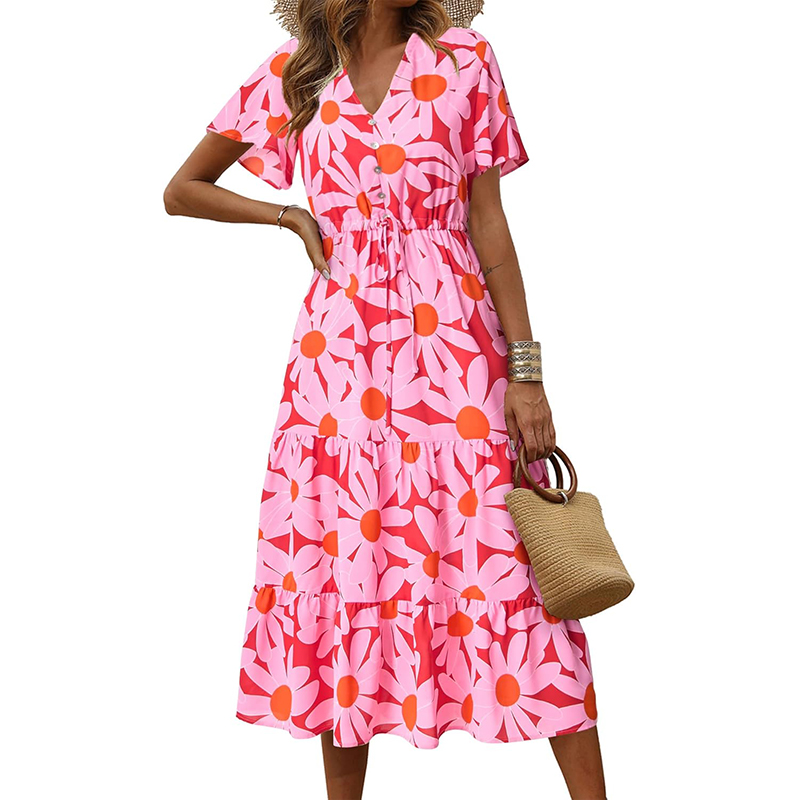
The foundation of a professional outfit lies in its material. Your dress will instantly fail the business casual test if the fabric looks cheap or overly relaxed. We must scrutinize textiles and silhouettes before bringing any piece into the office.
Crisp, weighty fabrics are an absolute necessity. They hold a professional shape throughout long hours of sitting and standing. Cotton poplin delivers a sharp, clean finish resembling traditional button-down shirts. Japanese crepe offers an elegant, slightly textured drape. It resists wrinkles perfectly. Silk blends and heavy linen also work well. They provide breathability while maintaining a distinct architectural form.
You must actively avoid thin jersey knits and clingy spandex blends. These materials lack the necessary internal structure to look professional. They cling to the body, highlight undergarment lines, and wrinkle almost instantly. In a corporate setting, a jersey knit dress reads exactly like loungewear. Save these comfortable but unstructured pieces for weekend errands.
If you want the safest investment, look directly at the collared, button-down maxi dress. It represents the gold standard for workplace integration. The collar immediately frames the face with authority. The button front mimics traditional men's tailoring. These architectural similarities allow it to bypass the usual skepticism directed at long dresses. It feels familiar to the corporate eye.
Your choice of color dramatically alters how colleagues perceive your outfit. We strongly recommend anchoring your look using solid colors. Deep jewel tones like navy, emerald, or burgundy project confidence and maturity. If you prefer prints, exercise heavy restraint. Opt for micro-prints like subtle geometric shapes, classic houndstooth, or tiny dots. Oversized, tropical florals instantly push the garment back into the "vacation" category.
Fabric Type | Office Suitability | Key Characteristic |
|---|---|---|
Cotton Poplin | Highly Approved | Crisp, structured, resembles tailored shirting. |
Japanese Crepe | Highly Approved | Excellent drape, wrinkle-resistant, elevated texture. |
Thin Jersey Knit | Disqualified | Clingy, wrinkles easily, resembles pajamas. |
Spandex Blends | Disqualified | Lacks structure, overly casual drape. |
Even if you select the perfect poplin material, poor design choices can ruin your outfit's credibility. You must audit the garment's construction closely. Look for specific red flags indicating the piece belongs at a resort, not a desk.
Workplace standards require appropriate shoulder coverage. Halter tops completely expose the shoulders and upper back. They are never appropriate for the office. Thin spaghetti straps also fail compliance tests. Smocked bodices present another major issue. They create an overly youthful, casual aesthetic clashing heavily against corporate expectations. Stick to wider straps, capped sleeves, or full-length sleeves. A modest V-neck, boat neck, or traditional collar provides the safest neckline choices.
Many long skirts feature slits to allow normal walking mobility. However, you must establish a firm evaluation checkpoint regarding slit height.
Standing Test: Ensure the slit stops comfortably at or below the knee while standing still.
Walking Test: Take a few brisk steps. The fabric should not fly open and expose the upper thigh.
Seated Test: Sit down in a standard chair. If the slit falls open to reveal your mid-thigh, the dress is disqualified for office use.
High side slits often translate as eveningwear or club attire. Center-back slits usually offer safer mobility without sacrificing coverage.
A business-appropriate garment must be entirely bra-friendly. You should never need fashion tape or specialized adhesive undergarments for a regular Tuesday at the office. The dress must completely conceal your bra straps and back band. Exposed hardware or visible lace trims instantly degrade your professional image. Ensure the armholes are cut high enough to hide the side of your bra.
Common Mistake: Relying on a blazer to hide a completely open back. If you get too warm and need to remove your jacket, you will violate the dress code. The dress itself must pass the baseline test.
Once your dress passes the fabric and structure audit, you must build the rest of the outfit. Layering is not optional. It serves as the primary tool for shifting the garment from casual to authoritative.
Long skirts naturally carry a lot of visual volume. You must neutralize this bulk using structured outerwear. Pair your dress with a shrunken blazer or a structured, fine-knit cardigan. The crisp shoulders of a blazer add sharp lines to an otherwise fluid silhouette.
However, you must exercise caution regarding proportions. Avoid oversized, boxy "boyfriend" blazers. When you combine a massive jacket with a voluminous skirt, the entire outfit looks heavy and dowdy. You lose your shape entirely. Choose cropped or fitted outerwear ending right at your natural waistline.
Breaking up the visual bulk is critical. A continuous line of fabric from shoulder to ankle often swallows the wearer. We suggest integrating skinny belts to solve this problem. A slim leather belt adds a layer of intentional professionalism. It breaks up the pattern and highlights the narrowest part of your torso. Avoid wide, corset-style belts, as they tend to look too theatrical for standard corporate settings.
Your shoes finalize the entire aesthetic. You must mandate the use of closed-toe shoes. Footwear anchors the fluidity of the skirt and grounds the outfit.
Shoe Style | Status | Styling Note |
|---|---|---|
Pointed-Toe Flats | Mandatory | The sharp toe visually extends the leg and adds instant polish. |
Leather Loafers | Mandatory | Provides a grounded, menswear-inspired contrast to flowy skirts. |
Low Block Heels | Approved | Offers elevation without sacrificing daily comfort. |
Strappy Sandals | Ruled Out | Exposes too much foot; amplifies the vacation aesthetic. |
Espadrilles / Flip-Flops | Ruled Out | Strictly casual. Destroys any built-up professional credibility. |
Best Practice: Match the leather of your shoes to the leather of your skinny belt. This cohesive detail shows you put deliberate thought into your ensemble.
Styling theories are helpful, but we must also address practical reality. The modern office contains physical hazards uniquely threatening to long garments. Navigating these realities determines whether you will actually enjoy wearing your dress to work.
This is the most overlooked logistical reality of long hems. Wheeled desk chairs act like magnets for excess fabric. If your hem sweeps the floor, it will inevitably get tangled in the casters of your chair. This poses a legitimate physical risk. It can ruin your expensive garment, leave grease stains on the fabric, or cause an embarrassing tripping incident when you stand up quickly.
To mitigate this risk, advise your tailor on appropriate length limits. Your hem should graze the ankle rather than sweep the floor. Leaving two to three inches of clearance above the ground completely removes the rolling chair hazard. It also keeps your hem free from slush or rain during your morning commute.
Corporate air conditioning systems are notoriously aggressive. Offices often feel like refrigerators during the peak of summer. A heavy-weight cotton or crepe dress serves as a brilliant, practical defense against this climate control. It covers your legs entirely, trapping body heat far better than a knee-length skirt.
When you pair this leg coverage with a structured blazer, you create a highly functional summer choice. You remain cool during your humid outdoor commute, but stay comfortably warm once you sit at your desk. It represents the ultimate modular outfit for unpredictable office temperatures.
Integrating a long dress into your professional rotation requires diligence. A maxi dress is only business casual when its material, cut, and accompanying layers project authority. Thin fabrics, high slits, and exposed shoulders belong strictly to your weekend wardrobe. However, when you select weighty fabrics like Japanese crepe, choose sophisticated shirt-dress silhouettes, and anchor the look with closed-toe shoes, you create a powerful workplace outfit.
Before your next office day, take action. Audit your current dress rotation using these structural guidelines. Set aside the jersey knits. Belt your poplin dresses. Add a tailored blazer to complete the look. You will secure your workplace credibility while enjoying unparalleled daily comfort.
A: Maxi skirts are often easier to style for work. When you pair a long skirt with a crisp, tucked-in blouse or a structured button-down, it immediately elevates the formality. The visual break at the waist naturally creates a traditional, polished silhouette that offices readily accept.
A: Relying entirely on an outer layer is risky. Offices fluctuate in temperature, and removing your blazer could violate the dress code if your dress has spaghetti straps. We recommend choosing capped sleeves or wide straps as a safer baseline, ensuring you remain professional even without the jacket.
A: We strongly advise against it. Interviews require you to project maximum traditional professionalism. Default to classic tailoring, such as structured trousers or a knee-length sheath dress. Wait until you secure the job and confirm the specific office culture before introducing longer, fluid hemlines.


