
Views: 0 Author: Site Editor Publish Time: 2026-05-07 Origin: Site


Many petite women avoid floor-length fashion altogether. They often fear looking like they are playing dress-up in adult clothes. The persistent worry of tripping over excessive fabric keeps these garments out of their closets. We completely understand this specific skepticism. Standard maxi dresses are fundamentally built for average-to-tall proportions. Manufacturers scale these long garments for heights well above five feet. However, petite women absolutely can wear these beautiful pieces. You just need to stop treating the fit as a simple length issue. Instead, you must start treating it as a structural proportion issue. This guide provides a highly practical framework for evaluating dress silhouettes. We will help you assess necessary alteration requirements confidently. You will also learn clever sizing workarounds to utilize before you ever make a final purchase.
The real fit issue is the torso: Standard maxis fail petites because the waistline and armholes sit too low, not just because the hem drags.
The "Midi Hack" works: Buying regular-sized midi or tea-length dresses often yields the perfect, floor-skimming maxi length for a petite frame without alterations.
Fabric volume matters more than height: Lightweight fabrics (chiffon, thin cotton) combined with structure (empire waists, wrap ties) prevent the fabric from swallowing a smaller frame.
Strategic skin exposure creates balance: V-necks, halters, and strategic slits draw the eye upward and break up heavy blocks of fabric.
To master long dresses, you must first understand the torso discrepancy. Petite sizing is not just about making garments shorter at the bottom. Standard dresses feature significantly longer torso measurements. This structural design causes waistbands to drop uncomfortably to the hips on a petite woman. When a waistline drops, it instantly ruins the garment's intended shape. It creates a slouchy, ill-fitting appearance.
You must also watch out for the armhole and neckline gap. Standard armholes sit much lower on the body. This lowered placement leads to awkward side-gaping. It exposes undergarments unexpectedly. Furthermore, standard necklines plunge much deeper than designers originally intended for the wearer. This pulls the visual weight downward.
Finally, consider the fabric drowning effect. Excessive skirt volume visually swallows a smaller silhouette. Large, bold prints are usually scaled for tall figures. When petite women wear them, these massive patterns visually widen and shorten their frames. It creates an unbalanced look.
Our ultimate decision takeaway is clear. A true petite fit requires precisely scaled-down details across the entire garment. You need smaller pockets, appropriately placed armholes, and much shorter strap drops. A simple chopped hemline never solves the core proportion problem when shopping for maxi dresses.
You do not always need to shop exclusively in the petite section. We highly recommend purchasing a standard-size midi or tea-length dress. These calf-length garments function perfectly as ankle-length long dresses for a petite frame. This clever workaround saves you expensive tailoring trips.
The math for online shopping is incredibly straightforward. Always check the model's height in the product description. Calculate the height difference between the model and yourself. This subtraction helps you estimate where the midi hem will actually fall. We created a simple projection chart below to help you calculate this.
Model Height Math Chart (The Midi Hack) | |||
Standard Model Height | Original Dress Cut | Your Height (Petite) | Estimated Fit Result on You |
|---|---|---|---|
5'9" to 5'10" | Mid-calf (Midi) | 5'0" to 5'2" | Floor-skimming (Maxi) |
5'8" to 5'9" | Below the knee (Tea-Length) | 4'10" to 5'0" | Ankle-length (Maxi) |
5'7" to 5'8" | Ankle-length (Maxi) | 5'1" to 5'3" | Will drag (Requires tailoring) |
We must warn you about certain risk mitigation factors. This hack works flawlessly for column, wrap, or A-line styles. However, fit-and-flare midi dresses pose a structural risk. Their built-in waistlines might still sit slightly too low. If you do not buy a dedicated petite size, check the bodice measurements carefully.
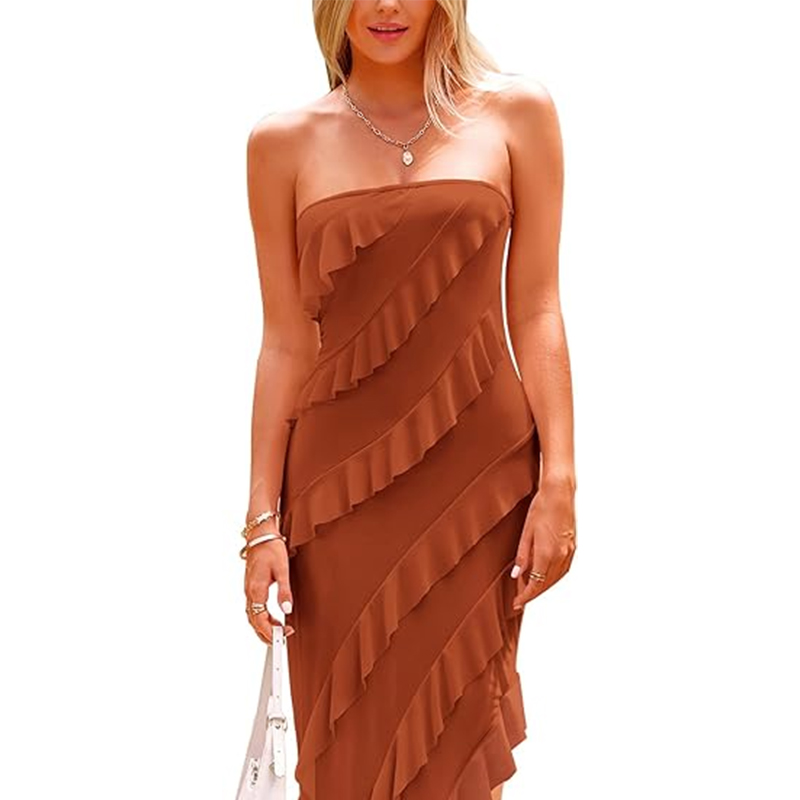
Aim for the hem to hover precisely one to two inches off the ground. Measure this clearance while standing completely barefoot. The fabric should lightly brush the top of your shoe. It must never drag on the floor. This exact spacing maintains clean vertical lines. It also prevents dangerous tripping hazards.
You must prioritize specific dress architectures. Empire waists work wonders because they intentionally raise the waistline. This illusion elongates the legs dramatically. Wrap dresses allow you customized torso cinching. You can pull them tightly to define your waist. Column shapes remove excess horizontal volume effectively. Avoid shapeless, bohemian tent dresses completely. Only consider them if they feature a highly adjustable drawstring waist.
Look closely for open necklines before making a purchase. V-necks, square necks, or halters expose the collarbone beautifully. They pull the viewer's visual focus upward toward your face. Ensure your selected garment features appropriately raised armholes. Adjustable straps remain essential for petites. They let you control exactly where the bodice sits on your chest.
Filter your choices heavily by fabric type. Select lightweight, flowing materials for maxi dresses. Crepe, chiffon, and soft jersey drape closely to your body. They move fluidly without adding bulky volume. Opt for micro-prints, vertical stripes, or solid monochromatic colors. Large, bold geometric patterns easily overwhelm you. They visually cut a petite frame directly in half.
Even with careful shopping, you will likely need a tailor for some pieces. Knowing what to fix and what to abandon saves you immense frustration.
The easy fixes represent low cost and low risk. They are highly worthwhile investments:
Hemming the bottom: This modification is standard practice. It is relatively inexpensive, typically costing around $15 to $20.
Adding back darts: Small darts pull in excess fabric at the waist. They instantly fix a boxy torso problem. This modification is highly effective and budget-friendly.
The dealbreakers carry high cost and high risk. Avoid garments requiring these structural overhauls:
Lifting the shoulders: This demands complex, costly tailoring.
Reconstructing a neckline: This process is incredibly labor-intensive.
Raising armholes: This requires taking the entire bodice apart entirely.
Tailoring Risk Assessment Matrix | ||
Alteration Type | Complexity Level | General Recommendation |
|---|---|---|
Shortening Hem | Low | Highly Recommended |
Adding Waist Darts | Low to Medium | Recommended for better fit |
Shortening Straps | Low | Highly Recommended |
Rebuilding Armholes | High | Return the dress |
Adjusting Torso Length | Very High | Return the dress |
If you prefer to skip professional alterations, assess belt integration. See if you can fix the fit instantly using a belt. Petites must always use thin belts. Thin belts avoid visually chopping the torso. Wide belts, conversely, will heavily truncate your figure and ruin the elongating effect.
Your accessory and shoe choices dictate the success of your outfit. Proper styling dramatically enhances the vertical lines of long garments.
Elevate the Look: Pair your garments with small wedges, platform sandals, or pointed-toe flats. These specific options provide necessary lift. They elongate the leg line without fighting the fabric.
Match Your Colors: Color matching matters significantly. Choose nude or skin-tone shoes. They beautifully extend the leg line when they peek out from the hem. Dark shoes can sometimes create a harsh visual stop at the ankle.
Utilize Vertical Accessories: Utilize long, delicate necklaces. They powerfully reinforce the vertical line of your outfit. Avoid chunky chokers entirely. They visually shorten the neck and counteract the dress's elongating effects.
Petite women should never avoid wearing beautiful long dresses. You simply need to shop smartly using a strict structural checklist. Stop buying garments blindly off the rack. A successful purchase always relies on actively managing fabric volume. You must find the true waistline and deliberately expose your neckline to balance your proportions.
We highly encourage you to audit your current online shopping carts right now. Apply the mathematical "midi hack" to those standard sizes. Filter your upcoming searches specifically for empire waist and wrap silhouettes. By following these focused criteria, you will consistently discover flattering options that elevate your personal style.
A: Yes, absolutely. Focusing strictly on proportion over height remains the key. Stick to hem lengths that consistently clear the floor by one to two inches. Always prioritize fitted bodices over loose, flowing tops to avoid drowning your frame in excess fabric.
A: Petite dresses are scaled proportionally across the entire garment. They feature intentionally shorter torso lengths and notably higher armholes. Designers adjust the waist placements to sit higher. They also use scaled-down design details, like smaller ruffles and thinner straps, rather than simply offering shorter hems.
A: Wedges or block heels provide stable, comfortable height without catching dangerously on the hem. If you strongly prefer wearing flats, always opt for pointed toes. A pointed toe extends beyond the hemline to maintain a beautifully elongated vertical line.


